
By Robyn Jackman, Registered Clinical Social Worker
Thought traps are habitual, unhelpful patterns of thinking that feel completely true but quietly distort your reality — and they’re far more common than most people realise. Understanding what thought traps are and where they come from is the first step toward responding intentionally rather than reacting to your environment from a distorted filter. If you’ve ever caught yourself spiralling after a single setback, or felt certain a situation was worse than others saw it, you’ve likely already experienced one. Recognising these patterns is something you’re entirely capable of — and that recognition is where real change begins.
What Are Thought Traps?
Thought traps, also called thinking traps or cognitive distortions, are automatic, unproductive patterns of thinking that feel convincing but don’t accurately reflect reality. Think of them like a funhouse mirror in your mind: the reflection looks like you, but everything is slightly warped. These distorted thinking patterns don’t require conscious effort to activate; they run quietly in the background, shaping how you interpret relationships, setbacks, and your own worth.
According to Johns Hopkins, nearly 1 in 10 U.S. adults are experiencing a mental health crisis — a stark reminder of how destructive unchecked thought patterns can become. Yale psychologist Woo-kyoung Ahn, author of Thinking 101, puts it plainly: “Humans have a tendency to make snap judgments and assumptions due to our cognitive biases.”
Thought traps are not character flaws. They are learned responses the brain developed to process the world quickly — shortcuts that once served a purpose but now create more noise than clarity.
Common Thinking Traps You Might Recognize
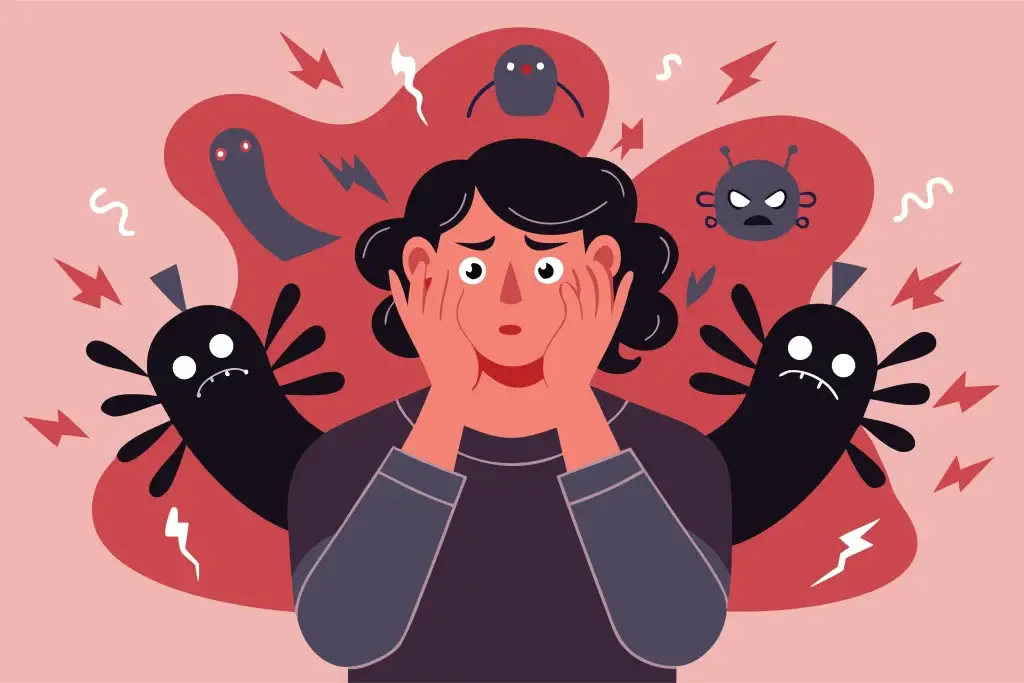
Several well-documented thinking errors show up repeatedly across therapy rooms, workplaces, and everyday relationships. While researchers have catalogued numerous cognitive distortions, these eight are the ones most people encounter most often.
All-or-Nothing Thinking and Overgeneralization
All-or-nothing thinking treats every outcome as either a total success or a complete failure, nothing in between. “I stumbled through that presentation, so I’m terrible at my job.” Overgeneralization extends a single bad moment into a permanent pattern: “This always happens to me.” Both thinking errors collapse complexity into a story that feels certain but rarely holds up under scrutiny.
Catastrophising, Emotional Reasoning, and Filtering
Catastrophising jumps to the worst possible outcome and treats it as inevitable. Emotional reasoning mistakes a feeling for a fact — “I feel like a burden, so I must be one.” Filtering locks attention onto the single negative detail while screening out everything else, amplifying one critical comment until the fuller picture disappears entirely.
| Thinking Trap | What It Sounds Like | What It Distorts |
| All-or-nothing thinking | “I failed once, so I’ll always fail.” | Nuance and partial progress |
| Catastrophising | “If I make one mistake, everything falls apart.” | Probability and proportion |
| Mind reading | “They didn’t reply — they must be angry with me.” | Other people’s intentions |
| Overgeneralisation | “This always happens. Nothing ever works out.” | Isolated events vs. patterns |
| Emotional reasoning | “I feel anxious, so something must be wrong.” | Feelings as evidence |
| Personalisation | “The project failed because of me.” | Shared responsibility |
| Filtering | “The feedback was mostly positive, but that one critique…” | The full picture |
| Should statements | “I should handle this better by now.” | Self-compassion and growth |
These patterns overlap frequently with anxiety and conditions like imposter syndrome, where distorted self-assessment becomes a persistent cycle. These patterns often overlap with anxiety and experiences like imposter syndrome, where distorted self-assessment can become a persistent cycle; for many individuals, masking becomes a way to manage that cycle by hiding perceived flaws, reducing the risk of judgment, and trying to appear more capable, calm, or “together” than they feel internally.
Why Your Brain Gets Stuck in These Patterns
The brain is not broken when it falls into thought traps — it is doing exactly what it was designed to do, just in the wrong context. The negativity bias, a survival mechanism rooted in evolutionary psychology, hardwires us to scan for threats. In a world where physical danger was constant, this kept people alive. In modern daily life, that same wiring flags an unanswered text as rejection and a quiet colleague as disapproval.
Repeated thinking patterns also carve neural grooves over time. Neuroplasticity — the brain’s remarkable capacity to change — works against us when the same distorted interpretations fire repeatedly — those pathways deepen, and what was once a habit starts to feel like truth.
Exploring the underlying thoughts driving emotions is often the more direct route to loosening a thought trap’s grip. The CDC reports that 1 in 20 U.S. adults regularly experience feelings of depression — conditions that are often fuelled and prolonged by recurring distorted thinking patterns. Thought traps rarely exist in isolation; they sit on top of deeper feelings like shame, fear, or unprocessed grief, which is why addressing them often means looking beneath the surface thought itself.
How to Get Out of a Thought Trap

Getting out of a thought trap is a learnable skill — not a personality overhaul. The following three-step process draws from evidence-based approaches like CBT and ACT, and it gets easier with practice.
Step 1 — Notice it. Name the trap when it appears. Labelling it creates psychological distance: “This is my catastrophising brain, not reality.” Writing it down, even briefly, interrupts the automatic loop and makes the thought visible rather than invisible.
Step 2 — Question it. Use simple challenge questions drawn from cognitive behavioural approaches:
- What evidence supports this thought?
- What evidence contradicts it?
- Would I say this to someone I care about?
- Am I confusing a feeling with a fact?
Step 3 — Replace it. Generate a balanced, realistic alternative — not forced optimism, but accuracy. Instead of “I always mess things up,” try “I made a mistake today. I’ve also done things well.”
A technique called cognitive defusion takes this a step further — rather than arguing with a thought, you learn to observe it as mental weather passing through, not a verdict on who you are. These skills are often developed collaboratively in therapy, where someone can help you catch the patterns you can’t yet see on your own. Rewiring habitual thinking takes time, and patience with yourself is part of the process.
When Thought Traps Are Bigger Than a Mindset Shift
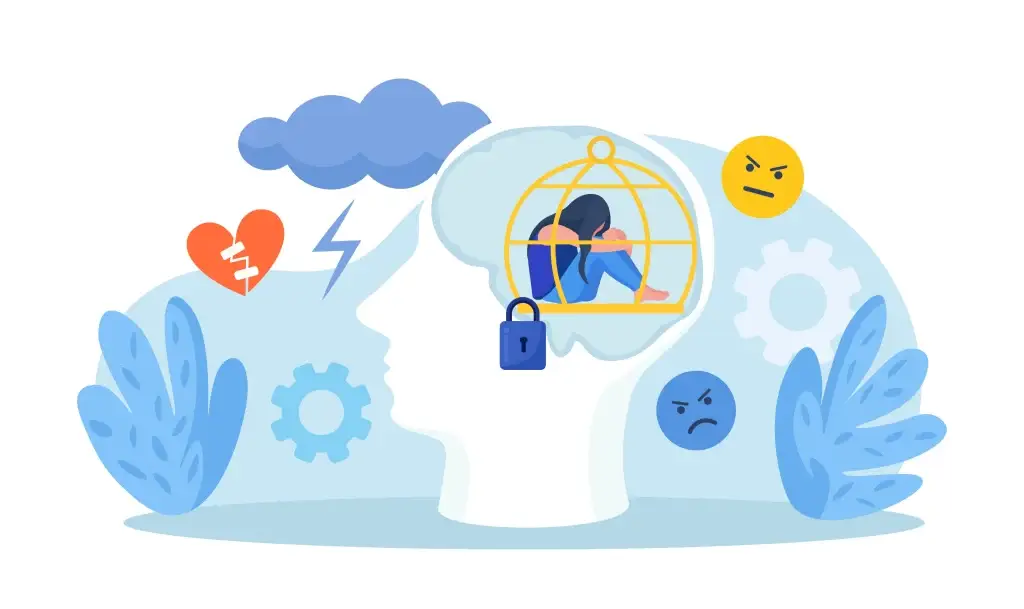
Self-help tools work well for mild or situational thought traps. But when cognitive distortions are deeply entrenched — tied to anxiety, trauma, depression, or chronic stress — professional support can create faster and more lasting change.
Cognitive Behavioural Therapy is specifically designed to identify and restructure the distorted thinking patterns that keep people stuck. It offers a structured, evidence-based path to catching automatic thoughts before they take over. For thought traps rooted in deeper emotional patterns or early experiences, Internal Family Systems therapy offers another pathway — one that explores the inner parts of yourself that may be driving those distorted beliefs.
Patterns like imposter syndrome — where distorted self-assessment persists despite clear evidence of competence — are a strong signal that the thought trap has roots deeper than a reframe can reach alone. If you’re curious whether this kind of structured support is right for you, learn more about our CBT therapy services in Halifax. A free 15-minute consultation is available for anyone wondering whether therapy might help — a low-barrier starting point, not a commitment.
Thought traps are common, understandable, and — with the right tools and support — genuinely changeable. Whether you work through them on your own or with a therapist, the goal is the same: greater clarity, more choice, and a truer picture of yourself and your life.
Book your free 15-minute consultation at Intentional Outcomes Counselling. Whether you’re in Halifax or anywhere in Nova Scotia, our team can help you understand and work through the thought patterns keeping you stuck. Call us at 902-445-3800 or visit us at 480 Parkland Drive, Unit 201, Halifax, NS.
Disclaimer
This article provides general educational information and is not a substitute for professional mental health services, such as psychotherapy, medical advice, diagnosis, or treatment.
While resources like articles on attachment styles can promote self-understanding, they cannot replace personalized support from a qualified mental health professional who can evaluate your unique situation and needs.
If you are struggling with your relationships or mental health, we strongly recommend seeking personalized support from a licensed therapist.
If you are in immediate danger or need urgent medical help, call 911. If you or someone you know is thinking about suicide, call or text 9-8-8 any time for support in Canada.


